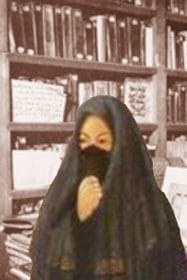

Full Name: Amat al-Wahid
Arabic: أمة الوحيد
Born:
Died: 988 CE
Origin: Baghdad, Iraq
Famous for: Female mufti (jurist)
Amat al-Wahid (Arabic: أمة الوحيد), also known as Sutayah, was a distinguished tenth-century female jurist (faqiha) and mufti of Baghdad who died in 987/988 CE (377 AH). A renowned scholar and teacher of the Qurʾan, she was recognised as an authority of the Shafiʿi school of Islamic law and was empowered to issue fatwas – formal legal verdicts. In an age when such a role was rarely held by a woman, Amat al-Wahid earned the respect of the scholarly establishment of the Abbasid capital on the strength of her learning, her piety, and her mastery of the sacred sciences.
Who Was Amat al-Wahid?
Amat al-Wahid lived in Baghdad during the later Abbasid era, at a time when the city was among the greatest centres of learning in the world. She was celebrated as a master of the Qurʾan and as a jurist qualified to give legal opinions, and her standing was such that scholars recorded and transmitted her juristic views on her authority alone. She was, notably, one of only two women known to have served as muftis in Baghdad in her time – the other being Umm Isa bint Ibrahim – which marks her out as a genuinely exceptional figure in the intellectual history of the medieval Islamic world.
Her Name: “Servant of the Unique”
Her name, Amat al-Wahid, is a devotional one, meaning “servant” or “handmaid of the Unique” – al-Wahid being one of the names of God, “the One.” Such theophoric names, formed with ʿAbd (servant) for men and Amat for women followed by a divine name, expressed devotion and were borne by many pious families. She was also known by the name Sutayah. Her name is sometimes transliterated as Amah al-Wahid.
A Scholar’s Daughter
Amat al-Wahid was born into learning. She was the daughter of the prominent Shafiʿi jurist al-Mahamili (al-Muhamili), a respected legal authority of Baghdad, and she received an education befitting a scholarly household. Taught by her father and by several other tutors, she memorised the Qurʾan at an early age and gained a firm command of Arabic literature and grammar – the essential foundations for the study of law and scripture. Her upbringing illustrates a well-attested pattern in medieval Islamic society: learned families often educated their daughters as thoroughly as their sons, and some of those daughters rose to prominence as teachers and transmitters of knowledge in their own right.
Baghdad in the Later Abbasid Age
To appreciate Amat al-Wahid’s achievement, it helps to picture her world. Tenth-century Baghdad was the beating heart of Islamic civilisation – a metropolis of mosques, libraries, and study circles where jurists, theologians, grammarians, and scientists gathered. The four great Sunni schools of law were taking their mature form, and the Shafiʿi school – to which Amat al-Wahid belonged – was one of the most influential currents of legal thought in the city. In this dense scholarly environment, reputation was everything, and authority was earned through rigorous training, careful transmission of texts, and the recognition of one’s peers.
A Woman Mufti
Amat al-Wahid’s most remarkable distinction was her role as a mufti – a scholar qualified to issue fatwas, considered legal opinions on questions of Islamic law. A fatwa is not a court judgment but an expert response to a question, and the ability to issue one required deep mastery of the Qurʾan, the hadith (traditions of the Prophet), and the methods of jurisprudence. She issued her verdicts according to the doctrines of the Shafiʿi school.
For a woman to occupy this position was, as the sources note, highly unusual – yet it was not unheard of. That Baghdad could count two women muftis in the same period shows that, while rare, the participation of women at the highest levels of legal scholarship was an accepted, if exceptional, reality. Amat al-Wahid’s standing rested not on birth or office alone but on demonstrated competence in a demanding field.
Scholar and Transmitter of Knowledge
Beyond issuing fatwas, Amat al-Wahid was an active participant in the legal life of the city, associated with the deliberations of the leading Shafiʿi jurists of Baghdad. A telling measure of her authority is that scholars copied and transmitted her legal traditions on her authority alone – in a scholarly culture where knowledge was passed down through named chains of transmission, to be cited as a sole authority was a significant mark of trust and standing. Her opinions were treated not as curiosities but as reliable contributions to the tradition.
Piety and Charity
Amat al-Wahid was esteemed for her character as well as her scholarship. She was especially remembered for her generous almsgiving to the poor – charity (sadaqa) being one of the most prized virtues in Islamic ethics. In her, learning and piety were joined: the same devotion that shaped her name and her study of scripture expressed itself in practical generosity toward those in need.
Her Legacy
Amat al-Wahid’s influence extended into the next generation through her son, Abu al-Husayn, who followed his mother’s example in learning and went on to become a judge (qadi) – a striking case of scholarship passing from mother to son. More broadly, she belongs to a long and often under-appreciated tradition of women scholars in Islam, the muhaddithat and faqihat, who taught, transmitted hadith, and contributed to law across the centuries.
Her life stands as evidence that, even in the tenth century, a woman of exceptional ability could reach the summit of religious scholarship in one of the world’s great intellectual capitals – teaching the Qurʾan, guiding the faithful through her fatwas, and earning the lasting respect of her peers. Amat al-Wahid remains a quietly inspiring figure in the history of Islamic learning.
Frequently Asked Questions
Who was Amat al-Wahid?
She was a tenth-century female jurist and mufti of Baghdad (died 987/988 CE), a renowned scholar and teacher of the Qurʾan authorised to issue fatwas according to the Shafiʿi school of law.
What does the name Amat al-Wahid mean?
It means “servant of the Unique,” al-Wahid (“the One”) being one of the names of God. She was also known as Sutayah, and her name is sometimes written Amah al-Wahid.
What made her role unusual?
Issuing fatwas as a woman was rare in her era. She was one of only two women known to have served as muftis in Baghdad at the time, the other being Umm Isa bint Ibrahim.
Who were her family?
She was the daughter of the prominent Shafiʿi jurist al-Mahamili, who helped educate her, and her son Abu al-Husayn followed her in scholarship and became a judge.
References and Further Reading
Amat al-Wahid is documented in biographical works on women in Islamic scholarship. Readers wishing to explore further may consult the following.
Secondary and Scholarly Sources
- Eliot Deutsch & Ron Bontekoe (eds.), A Companion to World Philosophies (Blackwell, 1997), pp. 109–110.
- Jennifer Heath, The Scimitar and the Veil: Extraordinary Women of Islam (Hidden Spring, 2004), p. 146.
- Mohammad Akram Nadwi, Al-Muhaddithat: The Women Scholars in Islam (Interface Publications, 2007) — the standard modern study of women scholars, teachers, and jurists in Islamic history, useful for wider context.