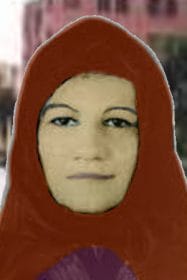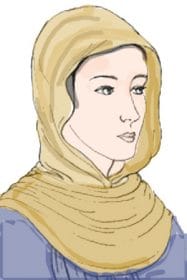
Zaynab al-Awadiyyah (Arabic: زينب الأوَدية) — also written al-Awadiyah or al-Awdiyah, and known as Zaynab of Banu Awd (زينب طبيبة بني أود) — was a seventh-century Arab physician and expert oculist: one of the earliest named women eye-doctors in recorded Arab and Islamic history. She belonged to the tribe of Banu Awd and earned a reputation across Arabia for treating diseases of the eye and for tending wounds. Her fame was such that a poet immortalised her name in verse, and centuries later a physician-historian recorded her among the doctors worth remembering.
What follows is what the sources actually preserve about her, set against the world she practised in. The written record of Zaynab is brief — but even a few lines, read carefully, tell us a great deal about medicine, reputation, and the place of women healers in early Arabia.
Who Was Zaynab al-Awadiyyah?
Zaynab is remembered as a ṭabība (a woman physician) who specialised in eye conditions. Medieval and modern writers agree on the core of her profile: she was widely renowned among the Arabs for her skill in treating sore and diseased eyes, for dressing and healing wounds, and for preparing topical remedies. Several accounts also associate her with minor surgery, placing her among the practical, hands-on healers of her age rather than the theoretical physicians of the later hospital era.
Her exact dates of birth and death were not recorded, and no place of birth or death survives in the sources. She is generally dated to the seventh century, with a number of historians situating her activity in the early Islamic and Umayyad period, when her renown spread beyond her own tribe.
Her Name and the Meaning of “al-Awadiyyah”
The name al-Awadiyyah is a nisba — an Arabic attributive surname indicating origin or affiliation. In her case it marks her belonging to Banu Awd, so “Zaynab al-Awadiyyah” simply means “Zaynab of the Awd tribe.” This is why the sources refer to her interchangeably as Zaynab al-Awadiyyah and Zaynab ṭabībat Banī Awd (“Zaynab, the physician of Banu Awd”). The variant spellings — al-Awadiya, al-Awadiyyah, al-Awdiyah — all transliterate the same Arabic name.
The Banu Awd Tribe: Her Roots
Banu Awd (بنو أود) was a Qahtanite Arab tribe descended from Awd ibn Saʿd al-ʿAshirah, a branch of the larger Madhhij confederation. The tribe was historically associated with Yemen and the southern Arabian Peninsula, and members later settled in centres such as Kufa and greater Syria. Although the classical historians say comparatively little about Banu Awd, the tribe is well attested in the works of Arab genealogists, and it appears in the political events of the early Islamic period.
Zaynab is, by a wide margin, the tribe’s most celebrated figure in the history of medicine — the person for whom the name Banu Awd is most likely to be remembered by anyone interested in the story of healing in Arabia.
Medicine in Seventh-Century Arabia
To understand Zaynab’s achievement, it helps to picture the medical world she worked in. Before the great translation movement carried Greek and Persian learning into Arabic, and before the founding of the large urban hospitals (bīmāristāns), medicine in Arabia was a practical craft. It was rooted in inherited experience, careful observation, herbal and mineral remedies, wound care, cauterisation (kayy), cupping (ḥijāma), and the setting of bones.
Eye disease was one of the most pressing health problems of the region. Sun glare, wind-borne sand, dust, and infection made inflammation of the eye (ramad, ophthalmia) and other ocular conditions extraordinarily common. A healer who could reliably relieve sore, inflamed, or infected eyes was therefore in constant demand — and a specialist known to be genuinely good at it would draw patients from far beyond her own community. That is exactly the reputation the sources attach to Zaynab.
Zaynab’s Specialty: The Eye and the Wound
Two areas of practice are consistently linked to Zaynab: ophthalmology and wound care.
As an oculist, she treated diseases and inflammations of the eye and, according to later summaries, prepared her own topical medications — the eye-salves, washes, and ointments that formed the backbone of pre-modern eye treatment. This is significant: compounding effective preparations required real knowledge of ingredients and their effects, a skill in its own right.
Alongside eye work, she is remembered for treating wounds — cleaning, dressing, and helping them heal — and some accounts credit her with minor surgical procedures. In an era when battlefield and everyday injuries were routine and often fatal through infection, competent wound management was life-saving work. Zaynab, in other words, was not a narrow specialist but a broadly capable practical physician whose signature strength was the eye.
Zaynab in the Kitab al-Aghani (The Book of Songs)
The most vivid early trace of Zaynab appears in the Kitab al-Aghani (“The Book of Songs”), the vast literary and historical anthology compiled by the tenth-century scholar Abu al-Faraj al-Isfahani. The Aghani is one of the richest surviving windows onto Arab poetry, biography, and social life, and Ibn Khaldun famously called it the register of the Arabs.
There, Zaynab is named in a line of verse in which a poet laments that death might carry him off before he can journey to consult her:
أَمُخْتَرِمي رَيبُ المَنونِ وَلَم أَزُر … طَبيبَ بَني أَودٍ عَلى النَأيِ زَينَبا
“Will the blows of fate carry me off before I have journeyed — despite the distance — to Zaynab, physician of Banu Awd?”
The verse is a small masterpiece of testimony. The poet treats a visit to Zaynab as something worth crossing distance for, and frames dying without having reached her as a genuine loss. To be named this way in Arabic poetry — the most prestigious art form of the culture — is a marker of real fame. It tells us Zaynab’s reputation had travelled well beyond Banu Awd and had entered the shared memory of the Arabs.
Zaynab in Ibn Abi Usaybiʿa’s Uyun al-Anba
Zaynab is also noted in ʿUyūn al-Anbāʾ fī Ṭabaqāt al-Aṭibbāʾ (“The Best Accounts of the Classes of Physicians”), the celebrated biographical encyclopedia of physicians compiled by the thirteenth-century Syrian doctor Ibn Abi Usaybiʿa (d. 1270). His work gathers the lives of notable physicians from the Greeks, Romans, Indians, and the Islamic world, and remains one of the single most important sources for the history of medicine in Arabic.
Her inclusion is telling for a particular reason: across his entire encyclopedia, Ibn Abi Usaybiʿa — himself trained as an oculist, from a family of oculists — names remarkably few women physicians. That Zaynab was remembered and recorded at all, some six centuries after she lived, speaks to how firmly her reputation had lodged in the tradition.
Women Physicians of Early Islam: Zaynab Among Her Peers
Zaynab did not stand alone. She belongs to a documented tradition of Arab and early Muslim women healers whose work is under-reported largely because so little was written down, and much of what survives is in Arabic. Her better-known contemporaries and near-contemporaries include Rufaydah al-Aslamiyyah, often described as running the first mobile field hospital in Islamic history; al-Shifāʾ bint ʿAbdullah, a literate healer appointed to a public regulatory role by the caliph ʿUmar ibn al-Khattab; and a number of women who nursed and treated the wounded on and off the battlefield.
Set against this group, Zaynab’s distinction is her specialisation. Where many of the recorded women healers are remembered for wound care and nursing, Zaynab is remembered specifically as an oculist — a named woman associated with expertise in a defined medical field, and preserved in both a literary classic and a medical encyclopedia.
Legacy and Significance
The importance of Zaynab al-Awadiyyah lies less in a detailed biography — which history did not preserve — than in what her memory represents. She stands as evidence that women practised skilled, specialised medicine in seventh-century Arabia, that their competence was publicly acknowledged, and that a woman could become famous enough for her name to survive in poetry and in the scholarly record for centuries.
For the modern reader, she is a reminder of how much of medical history — especially the history of women in medicine — survives only in fragments, and how much careful reading those fragments repay. Zaynab of Banu Awd, the oculist whom a poet feared to die without meeting, remains a quietly powerful figure in the long story of Arab and Islamic medicine.
References and Further Reading
The surviving record on Zaynab al-Awadiyyah is brief. Readers who wish to explore the primary sources and the wider context of women in early Islamic medicine may consult the following.
Primary Sources
- Abu al-Faraj al-Isfahani, Kitab al-Aghani (The Book of Songs) — the tenth-century anthology preserving the verse that names Zaynab. Background: Kitab al-Aghani (Wikipedia) and Abu al-Faraj al-Isfahani (Wikipedia).
- Ibn Abi Usaybiʿa, ʿUyūn al-Anbāʾ fī Ṭabaqāt al-Aṭibbāʾ (A Literary History of Medicine) — full open-access critical edition and annotated English translation (Savage-Smith, Swain & van Gelder, Brill / Wellcome Trust): A Literary History of Medicine Online (Brill, Open Access). Author background: Ibn Abi Usaybiʿa (Wikipedia).
Secondary and Scholarly Sources
- Sharif Kaf al-Ghazal & Marium Husain, “Muslim Female Physicians and Healthcare Providers in Islamic History” — Muslim Heritage (originally published in the Journal of the British Islamic Medical Association). Places Zaynab of Banu Awd among the women physicians of the Umayyad period and quotes the Aghani verse.
- Aref Abu-Rabia, Indigenous Medicine Among the Bedouin in the Middle East (Berghahn Books, 2015), ISBN 978-1-78238-690-2 — preview on Google Books.
- Haifaa Jawad, The Rights of Women in Islam: An Authentic Approach (Springer, 1998), ISBN 978-0-230-50331-1 — preview on Google Books.