Shajarat al-Durr: The Slave Who Became Sultana of Egypt
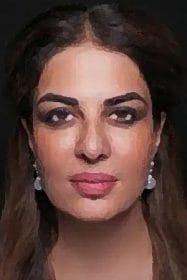
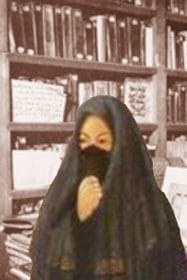
Shajarat al-Durr (Arabic: شجرة الدر, “Tree of Pearls”), also written Shajar al-Durr, was one of the most extraordinary rulers of the medieval Islamic world: a former slave who rose to become the Sultana of Egypt in 1250. Her royal name was al-Malika ʿIsmat ad-Din Umm-Khalil Shajar al-Durr. Her accession marked a genuine turning point in history — the end of the Ayyubid dynasty founded by Saladin and the beginning of the Mamluk era that would dominate Egypt and Syria for centuries. A rare female sovereign in Islamic history, a shrewd political operator, and a pioneering architectural patron, Shajarat al-Durr lived a life of dazzling ascent and brutal fall.
Who Was Shajarat al-Durr?
Shajarat al-Durr began life as a slave and concubine and ended it as a crowned monarch whose name was proclaimed in the Friday sermon and struck on coins. She stands, in the words of historians, at the very hinge between two dynasties — so intertwined with both the vanishing Ayyubids and the rising Mamluks that scholars have long debated whether to call her the last of the former or the first of the latter. What is not in doubt is her singularity: she was, as the medieval historian al-Maqrizi recorded, the first of the Mamluk rulers to govern Egypt.
Her Name and Origins
Her name, Shajar al-Durr or Shajarat al-Durr, means “Tree of Pearls” — a poetic image that she would later turn into a personal emblem. Like many of the slave-soldiers and slave-aristocrats of her age, she was most likely of Turkic origin, though some medieval writers reported that she was Armenian. She was purchased as a young slave in the Levant by as-Salih Ayyub, an Ayyubid prince who would become Sultan of Egypt, and she entered his household as a concubine before his rise to power.
From Concubine to the Heart of Power
Shajarat al-Durr’s bond with as-Salih Ayyub was forged in adversity. She accompanied him during his detention at the fortress of al-Karak around 1239, before he took the throne, and when he became Sultan of Egypt in 1240 she went with him to Cairo. She bore him a son, Khalil — titled al-Malik al-Mansur — and it was after the boy’s birth that as-Salih Ayyub married her, raising her from concubine to wife. Though Khalil died in childhood, Shajarat al-Durr would later invoke his memory to legitimise her own rule, signing official decrees as Walidat Khalil, “Mother of Khalil.”
The Seventh Crusade and a Secret Kept
In 1249, Egypt faced invasion. King Louis IX of France landed a crusader army at Damietta in the Seventh Crusade, and as-Salih Ayyub — already gravely ill — was carried to the front at al-Mansurah, where he died in November 1249. With the country under attack, Shajarat al-Durr made a fateful decision: together with a small circle of the army’s commanders, she concealed the Sultan’s death.
For weeks she held the state together through sheer nerve and cunning. The Sultan’s death was kept secret; decrees continued to be issued in his name; food was still carried to his tent as though he lived; and officials and soldiers were made to swear loyalty to the “ailing” ruler and his designated heir. Under this improvised regency, the Egyptian forces held firm. The crusaders were trapped at al-Mansurah, and by the Battle of Fariskur in April 1250 the Seventh Crusade was shattered and Louis IX himself taken prisoner. It was one of the great defensive victories of the age, and Shajarat al-Durr was at its centre.
Sultana of Egypt
The dead Sultan’s son and heir, al-Muazzam Turanshah, arrived to claim the throne but swiftly alienated both Shajarat al-Durr and the powerful Mamluk military caste, threatening her and demanding his father’s treasure. In May 1250 the Mamluks — among them the future sultans Baybars and Qalawun — assassinated Turanshah. He was the last of the Ayyubid sultans of Egypt.
In the vacuum that followed, the Mamluks and emirs took a step without real precedent: they installed Shajarat al-Durr as sultana, with the Mamluk commander Izz al-Din Aybak as her atabeg, or commander-in-chief. She assumed her royal titles — Malikat al-Muslimin (Queen of the Muslims) among them — had coins struck in her name, and was named in the khutba, the Friday sermon, the twin hallmarks of Islamic sovereignty. Strikingly, her surviving coin and the chronicler Ibn Wasil name her not with the feminine “sultana” but with the masculine title sultan, a measure of how she claimed the full authority of a monarch.
A Throne Contested
Her sovereignty was fiercely resisted. The Ayyubid princes of Syria refused to pay her homage, and in Baghdad the Abbasid Caliph al-Musta’sim — whose recognition was the traditional source of a sultan’s legitimacy — declined to acknowledge a woman as ruler, reportedly sending a scornful message offering to supply the Egyptians with a man if they had none. Facing this pressure, the Mamluks resolved to place a man on the throne: Shajarat al-Durr married Aybak and abdicated in his favour after a reign of roughly eighty days. Yet her withdrawal was formal rather than real. Having made Aybak sultan, she continued to wield decisive influence behind the throne, and her brief reign had already sealed two epochal outcomes — the expulsion of Louis IX and the end of crusader ambitions in the region, and the death of the Ayyubid dynasty and birth of the Mamluk state.
The Fall
The partnership between two such strong-willed rulers could not last. Over the following years, Aybak consolidated his power, and by 1257 mistrust had curdled into open rivalry. When Aybak moved to take a new politically advantageous wife, Shajarat al-Durr — feeling betrayed by the man she had raised to the throne — had him killed. The reprisal was swift and merciless: Aybak’s faction seized her, and on 28 April 1257 she was put to death by her enemies at the Citadel of Cairo. In Egyptian folklore, her dramatic story even became attached to the origins of the beloved dessert Umm Ali, said to be named for a rival who celebrated her downfall — a legend that shows how deeply her memory lodged in popular imagination.
Tree of Pearls: Her Architectural Legacy
Beyond politics, Shajarat al-Durr left a legacy in stone that arguably outlasted her reign. She used her wealth and authority to add a domed tomb to the urban madrasa of her late husband as-Salih Ayyub in Cairo. In doing so she pioneered a new architectural idea: the union of the mausoleum and the madrasa into a single commemorative complex. She was the first ruler of Islamic Egypt to fuse these forms, and the innovation proved enormously influential — the tomb-madrasa (and later the tomb joined to mosques, hospitals, and charitable foundations) became a defining signature of Mamluk architecture that reshaped the streetscape of Cairo for centuries.
She also built a mausoleum for herself, which survives today near the Mosque of Ibn Tulun and has been restored in recent years. Its most remarkable feature is a mihrab (prayer niche) decorated with a shimmering mosaic — executed, by tradition, by craftsmen brought from Constantinople — depicting a tree bearing pearl-like fruit. In a religious space where personal imagery was normally avoided, this was a discreet and ingenious visual pun on her own name: shajar (tree) and durr (pearls). By blending Byzantine mosaic craft with local funerary forms, she produced a distinctive, culturally syncretic style, and left her signature literally embedded in the sacred heart of her tomb.
Legacy and Significance
Shajarat al-Durr occupies a unique place in history. As a manumitted slave with no Ayyubid blood who nonetheless ruled as monarch, she has the distinction of being the first Mamluk ruler of Egypt and Syria — the founder-figure of a state that would go on to halt the Mongols, expel the crusaders from the Holy Land, and remain the dominant power in the Middle East until the rise of the Ottomans. She is also one of the very few women to have held sovereign power in the medieval Islamic world in her own name.
Her legend long outlived her. She appears as a central character in the great folk epic Sirat al-Zahir Baybars, was the subject of an early Egyptian feature film in 1935, and continues to fascinate historians and writers as a symbol of intelligence, ambition, and the perils of power. From concubine to queen, and from crusader war to architectural revolution, the “Tree of Pearls” remains one of the most compelling figures Egypt has ever produced.
Frequently Asked Questions
Who was Shajarat al-Durr?
She was a former slave who became Sultana of Egypt in 1250, marking the end of the Ayyubid dynasty and the start of the Mamluk era. Her name means “Tree of Pearls.”
Why is Shajarat al-Durr historically important?
She led Egypt through the defeat of the Seventh Crusade, became one of the few women to rule in her own name in the medieval Islamic world, and is regarded as the first Mamluk ruler of Egypt and Syria.
What was her origin?
She was most likely of Turkic origin, though some medieval sources describe her as Armenian. She was purchased as a slave by the Ayyubid sultan as-Salih Ayyub.
What is Shajarat al-Durr’s architectural legacy?
She pioneered the union of the tomb and the madrasa into a single commemorative complex — a form that became a hallmark of Mamluk architecture — and built a celebrated mausoleum for herself whose mihrab mosaic puns on her name, “Tree of Pearls.”
How did Shajarat al-Durr die?
After her second husband, Sultan Aybak, was killed in 1257 amid a power struggle, she was seized by his faction and put to death at the Citadel of Cairo on 28 April 1257.
References and Further Reading
Shajarat al-Durr is documented in medieval Arabic chronicles and studied in depth in modern scholarship. Readers wishing to explore further may consult the following.
Primary Sources (medieval chronicles)
- Al-Maqrizi, Kitab al-Suluk li-Maʿrifat Duwal al-Muluk — the principal narrative source for her reign.
- Ibn Taghri Birdi, al-Nujum al-Zahira fi Muluk Misr wa-l-Qahira; Abu al-Fida, The Concise History of Humanity; and Ibn Iyas, Badaʾiʿ al-Zuhur — further contemporary and later Mamluk-era accounts.
Modern Scholarship
- D. Fairchild Ruggles, Tree of Pearls: The Extraordinary Architectural Patronage of the 13th-Century Egyptian Slave-Queen Shajar al-Durr (Oxford University Press, 2020) — the definitive study. Overview: University of Illinois News.
- D. Fairchild Ruggles, “The Geographic and Social Mobility of Slaves: The Rise of Shajar al-Durr,” The Medieval Globe 2:1 (2016): open-access article.
- Amira K. Bennison / Amin Elsaleh et al., “Malika: Shajarat al-Durr,” AramcoWorld (July/August 2016): aramcoworld.com.
- Amalia Levanoni, on women and power in the Mamluk state, World History Connected: worldhistoryconnected.press.uillinois.edu.