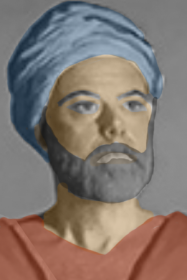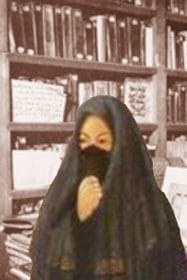
I’timad al-Rumaikiyya (Arabic: اعتماد الرميكية), also spelled E’etemad al-Rumaikiyya, was an eleventh-century Andalusian poet whose life reads like a legend: born into slavery, she rose to become the favourite wife and consort of Al-Mu’tamid ibn Abbad, the poet-king of Seville, and one of the most celebrated women of Muslim Spain. Renowned for her wit, beauty, and verse, she wielded remarkable influence at court — and shared her husband’s dramatic fall from glittering power into exile and captivity. Born around 1045–1047 in Seville and dying in exile at Aghmat around the 1090s, her story became one of the great romances of al-Andalus.
Who Was I’timad al-Rumaikiyya?
I’timad al-Rumaikiyya was a woman of humble origins who, through intelligence and charm, reached the summit of Andalusian courtly life. She is remembered above all as the beloved of Al-Mu’tamid, the last independent Abbadid ruler of the Taifa of Seville, and as a poet in her own right in an age when the courts of al-Andalus prized eloquence above almost everything else. Their mutual devotion inspired some of the most tender love poetry of the period, and her personality — passionate, wilful, and quick-witted — left a deep mark on the literature and folklore of both the Arab world and later Spain.
Her Name and Origins
Her given name, I’timad, means “reliance” or “trust” in Arabic. Her second name, al-Rumaikiyya, is a nisba — an attributive surname — derived from Rumayk ibn al-Hajjaj, the man who owned her before her marriage. In other words, “al-Rumaikiyya” simply means “the one belonging to Rumayk.”
Before her transformation, she is said to have worked driving beasts of burden, and some accounts describe her master as a potter or muleteer of Seville. It was a lowly station, and the distance between it and the throne of Seville is exactly what made her rise so memorable to contemporaries and later storytellers alike. There is even a tradition that Al-Mu’tamid chose his regnal title, al-Mu’tamid ‘ala Allah (“he who relies on God”), with a play on her name, I’timad.
A Meeting on the Guadalquivir
The most famous account of how the two met takes place on the banks of the Guadalquivir (Wadi al-Kabir), the great river of Seville. According to the story, the young prince Al-Mu’tamid was walking with his friend and adviser, the poet Ibn Ammar, when he improvised the opening half of a verse, comparing the wind rippling across the water to a coat of chain-mail, and challenged Ibn Ammar to complete it.
Before his companion could answer, a young washerwoman on the riverbank supplied the finishing line herself — capping the image wittily by imagining what a shield that watery mail would make if only it could freeze. Struck by her quickness and beauty, Al-Mu’tamid sought her out, bought her freedom, and married her. Whether or not the exchange happened exactly so, the anecdote captures what the sources most admired in her: a mind as sharp as any poet’s at court.
From Slave to Consort of Al-Mu’tamid
Al-Mu’tamid’s choice did not please his father, Emir Al-Mu’tadid, who disapproved of the match — though he is said to have been won over in time, especially once she bore a grandson. When Al-Mu’tamid succeeded to the throne of Seville, I’timad became his consort and, by all accounts, the great love of his life.
Contemporaries reported that the king indulged her every wish, sometimes to the point that his subjects grumbled at his devotion. Yet she was far more than a pampered favourite. She is credited with carrying out the duties of a royal consort with real skill, and she was an active patron of the arts and of building. An inscription preserved in the Museum of Seville records that she was responsible for the construction of the tower (minaret) of a mosque that once stood on the present site of the Church of San Juan de la Palma; some accounts suggest the mosque itself may have been her project.
The Poet-Queen of Seville
The court of Seville under Al-Mu’tamid was one of the most brilliant literary centres of al-Andalus, and I’timad was at its heart. Husband and wife exchanged verses of deep feeling, and their relationship became a wellspring of poetry — his odes to her are among the treasures of Andalusian literature. Sadly, of I’timad’s own compositions, only a single poem is generally said to survive, a reminder of how much of women’s literary output from the period has been lost.
Her literary reputation was also carried forward by her daughter, Buthaina bint al-Mu’tamid, who became a poet as well — making them one of the notable mother-and-daughter pairs of poets in Andalusian history.
Legendary Whims: Almond Snow and Perfumed Mud
Some of the most enduring stories about I’timad concern her celebrated caprices, preserved most famously in the fourteenth-century Spanish work El Conde Lucanor by Don Juan Manuel, where they are told as a lesson in gratitude.
In one tale, I’timad saw snow fall and wept, longing to see snowy landscapes she could never reach. To console her, Al-Mu’tamid is said to have planted almond trees on the hills around Córdoba so that, each February, their white blossom would blanket the land like snow for her to enjoy.
In another, she watched a barefoot woman making mud bricks by the river and wept because she herself could never do anything so simple and free. To please her, the king ordered a courtyard filled with a fragrant mixture of rosewater and precious spices — musk, amber, cinnamon, camphor, and clove — so that she could tread and play in perfumed “mud” to her heart’s content. Later, when she complained that he never did anything to please her, he is said to have reminded her, in a phrase that became proverbial in Arabic — “Not even the day of the mud?” (a-ma yawma al-ṭīn) — a gentle rebuke against ingratitude that entered Andalusian popular memory.
Downfall and Exile to Aghmat
The golden years did not last. As the Christian Reconquista pressed on the taifa kingdoms, Al-Mu’tamid appealed for help to the Almoravid leader Yusuf ibn Tashfin of Morocco. The alliance eventually turned against him: in 1091 the Almoravids deposed Al-Mu’tamid and dismantled his kingdom. The royal family was taken across the sea and imprisoned in a fortress at Aghmat, near Marrakesh in Morocco.
There, the once-glittering court of Seville ended in poverty and grief. Several of the couple’s sons had already died in battle defending the kingdom, and the family’s destitution in captivity was lamented in Al-Mu’tamid’s most sorrowful exile poetry. I’timad is believed to have died in Aghmat around the 1090s, her fall from queen to captive mourned by the poets of her age. She and Al-Mu’tamid are memorialised together at Aghmat, where their tomb remains a site associated with the tragic romance of Andalus.
Legacy and Significance
I’timad al-Rumaikiyya endures as one of the most vivid figures of Muslim Spain. Her life dramatised themes that fascinated her contemporaries and continue to resonate: the power of wit and words to overturn fortune, the intensity of a royal love story, and the sharp reversal from splendour to ruin that befell the taifa kingdoms. She stands among the notable women poets of al-Andalus — alongside figures such as Wallada bint al-Mustakfi and her own daughter Buthaina — whose voices, though only partly preserved, testify to a rich culture of female literary participation.
Through the love poems of Al-Mu’tamid, the Spanish legends of El Conde Lucanor, and the monuments of Seville, the memory of the slave who became a poet-queen has outlasted empires. Her story remains a lasting emblem of the brilliance, passion, and tragedy of al-Andalus.
Frequently Asked Questions
Who was I’timad al-Rumaikiyya?
She was an eleventh-century Andalusian poet who rose from slavery to become the favourite wife and consort of Al-Mu’tamid ibn Abbad, the poet-king of Seville.
Why is she called “al-Rumaikiyya”?
“Al-Rumaikiyya” is a nisba (attributive surname) derived from Rumayk ibn al-Hajjaj, the man who owned her before Al-Mu’tamid freed and married her. Her given name, I’timad, means “reliance” in Arabic.
How did she meet Al-Mu’tamid?
By tradition, she completed a line of improvised verse that the prince had begun on the banks of the Guadalquivir in Seville, impressing him with her wit and beauty; he then bought her freedom and married her.
What happened to her at the end of her life?
After the Almoravids deposed Al-Mu’tamid in 1091, the family was exiled and imprisoned at Aghmat in Morocco, where she is believed to have died in poverty around the 1090s.
Did any of her poetry survive?
Only a single poem attributed to I’timad is generally said to survive, though her literary influence lived on through Al-Mu’tamid’s verse and through her daughter, the poet Buthaina.
References and Further Reading
The life of I’timad al-Rumaikiyya survives through a mixture of medieval Arabic accounts, later Spanish legend, and modern scholarship. Readers who wish to explore further may consult the following.
Foundational and Literary Sources
- Don Juan Manuel, El Conde Lucanor (14th century) — the Spanish collection that preserves the famous “almond snow” and “perfumed mud” anecdotes about I’timad and Al-Mu’tamid: El Conde Lucanor (Wikipedia).
- Al-Mu’tamid ibn Abbad — the poet-king whose love odes are the richest source on their relationship: Al-Mu’tamid ibn Abbad (Wikipedia).
Secondary and Scholarly Sources
- “Arab Spain’s Poet King” — a narrative account of Al-Mu’tamid and I’timad, including the Guadalquivir wit-contest: Arab America and TravelMag.
- Study of pain and exile in the poetry of Al-Mu’tamid ibn Abbad (with biographical notes on I’timad and her children), Migration Letters, vol. 20 (2023): journal article (PDF).
- Print bibliography (Spanish): M. Lucena Giraldo, Ciudades y Leyendas (Planeta, 2007); E. Sordo, Al-Andalus, puerta del paraíso (Argos, 1964); C. Castro de Zubiri, Nosotras, las mujeres (Revista Agustiniana, 2001).