
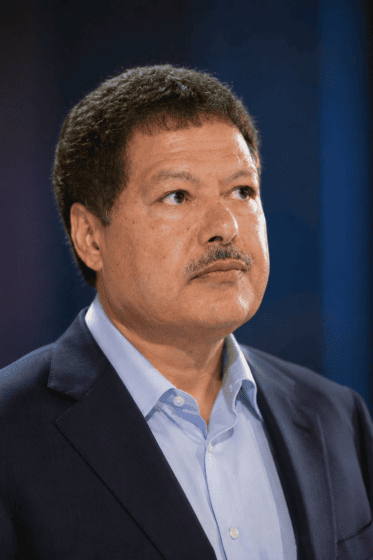
Full Name: Dr. Ahmed Zewail
Arabic: أحمد حسن زويل
Born: February 1946
Died: 2 August 2016
Origin: Egyptian-American
International Honor: Nobel Prize in Chemistry (1999)
Contribution: Pioneered “femtochemistry,” using ultra-fast lasers to study the transition states of chemical reactions in real-time. He is the only Arab scientist to win a Nobel Prize in a scientific category.
Dr. Ahmed Zewail: The Father of Femtochemistry and Egypt’s Nobel Laureate
Dr. Ahmed Zewail (Arabic: أحمد حسن زويل; 26 February 1946 – 2 August 2016) was an Egyptian-American chemist celebrated around the world as the “father of femtochemistry.” In 1999 he won the Nobel Prize in Chemistry – as the sole recipient – for developing a way to watch chemical reactions unfold in real time, atom by atom, using the fastest laser flashes ever harnessed for the purpose. In doing so, Zewail became the first Egyptian and the first Arab to win a Nobel Prize in a scientific field. A professor at the California Institute of Technology, a science diplomat, and a tireless champion of scientific education in the Arab world, he remains one of the most inspiring figures modern science has produced.
Who Was Ahmed Zewail?
Ahmed Zewail was a physical chemist whose work transformed how scientists see the most basic events in nature: the breaking and forming of chemical bonds. By inventing what has been called “the world’s fastest camera,” he opened a window onto processes so brief they had always been assumed invisible. Beyond the laboratory, he devoted the latter part of his life to advancing science in Egypt and the wider region, and he became a symbol of what a scientist from the developing world could achieve on the global stage.
From Desouk to the World
Zewail was born on 26 February 1946 in Damanhur, Egypt, and grew up in the nearby town of Desouk, in the Nile Delta. His beginnings were modest – his father worked with his hands before becoming a government official – but the young Ahmed showed an early and intense fascination with how things worked. He studied at Alexandria University, earning his bachelor’s degree in 1967 and a master’s degree in 1969. Recognising that the frontiers of his field lay abroad, he set his sights on the United States to pursue advanced research.
The Road to Caltech
Zewail completed his PhD at the University of Pennsylvania in 1974, followed by postdoctoral research at the University of California, Berkeley. In 1976 he joined the faculty of the California Institute of Technology (Caltech), where he would remain for the rest of his career. There he rose to become the first holder of the Linus Pauling Chair of Chemical Physics – a fitting honour, since the legendary Pauling, a Caltech Nobel laureate famed for his work on the chemical bond, was one of Zewail’s scientific heroes. Zewail became a naturalised US citizen in 1982, and directed Caltech’s Physical Biology Center for Ultrafast Science and Technology.
Femtochemistry: Filming the Fastest Events in Nature
Zewail’s defining achievement was the creation of femtochemistry – the study of chemical reactions on the scale of the femtosecond. A femtosecond is one quadrillionth of a second (10-15 s); to grasp how short that is, a femtosecond is to one second roughly as one second is to 32 million years. This is the timescale on which atoms actually move as bonds break and new ones form.
To capture events this fleeting, Zewail pioneered a technique using pairs of ultrafast laser pulses. A first “pump” pulse starts the reaction – setting the clock ticking – and a precisely timed “probe” pulse then photographs the molecules an instant later. By repeating this with tiny, controlled delays, he could assemble a series of snapshots into a kind of slow-motion movie of a chemical reaction in progress. For the first time, scientists could directly observe the fleeting transition states – the crucial in-between moments as reactants turn into products – which had previously been described only in vague, theoretical terms. It was, in effect, the world’s fastest camera trained on the very act of chemistry.
The 1999 Nobel Prize in Chemistry
In 1999, Zewail was awarded the Nobel Prize in Chemistry, cited “for his studies of the transition states of chemical reactions using femtosecond spectroscopy.” He received the prize alone – a rare distinction – and became the first Egyptian and first Arab science laureate, as well as the first science Nobel Prize winner from the Arabic-speaking world. In Egypt the announcement was met with national jubilation, and he was celebrated as a source of immense pride. The technique he founded went on to influence chemistry, physics, and biology, giving researchers a new degree of insight into – and control over – the fundamental steps of chemical change.
Beyond the Nobel: 4D Microscopy and Science Diplomacy
Dr. Zewail did not rest on his Nobel achievement. He extended his ultrafast methods from light to electrons, developing four-dimensional (4D) electron microscopy, which made it possible to visualise the behaviour of matter in both space and time at extraordinary resolution – imaging structural changes vastly faster than any earlier microscope could.
His stature also drew him into public service. He was appointed to US President Barack Obama’s Council of Advisors on Science and Technology (PCAST), and in 2010 he became one of the first US Science Envoys to the Muslim-majority world, travelling from North Africa to Southeast Asia to build scientific bridges following Obama’s 2009 Cairo address.
A Voice for Science in the Arab World
Throughout his life, Zewail argued passionately for a “scientific renaissance” in the Arab world, insisting that investment in education, research, and merit was the path to progress. During the 2011 Egyptian uprising he returned to his homeland and lent his moral authority to the moment, joining a committee for constitutional reform and acting as a respected, non-partisan intermediary. When speculation arose that he might run for president, he firmly declined political ambition, saying he wished only to serve Egypt through science and to “die as a scientist.”
Zewail City of Science and Technology
Zewail’s deepest legacy for his homeland is the Zewail City of Science and Technology, an independent, non-profit research university in Egypt dedicated to world-class science education and research. First conceived years earlier and revived in 2011, the project embodied his conviction that Egypt could and should produce cutting-edge science. In his commitment to the cause, Zewail contributed his own resources – including Nobel Prize funds – to help establish it, and its earliest, most brilliant students were admitted without fees. The institution continues to carry his name and his mission forward today.
Honours and Recognition
Few scientists have been so widely honoured. Zewail received Egypt’s highest state decoration, the Grand Collar of the Order of the Nile, along with a long list of international awards including the King Faisal International Prize, the Wolf Prize in Chemistry, the Franklin Medal, the Albert Einstein World Award of Science, and both the Priestley Medal and the Davy Medal. He was a Foreign Member of the Royal Society and held more than forty honorary degrees from universities around the world. When he died on 2 August 2016, after an illness, Egypt honoured him with a state military funeral attended by its president and its highest religious and civil dignitaries, and he was laid to rest in his homeland.
Legacy
Ahmed Zewail’s life bridged worlds – East and West, chemistry and physics, pure research and public service. He gave science a new pair of eyes with which to watch nature at its most fundamental, and he gave the Arab world a towering example of excellence. Through the field he founded, the institution that bears his name, and the countless students and scientists he inspired, Dr. Ahmed Zewail continues to illuminate the pursuit of knowledge – proof that a boy from the Nile Delta could reshape how humanity sees the very fabric of matter.
Frequently Asked Questions
Who was Dr. Ahmed Zewail?
He was an Egyptian-American chemist (1946-2016), known as the father of femtochemistry, who won the 1999 Nobel Prize in Chemistry and was the first Egyptian and first Arab to win a Nobel Prize in science.
What is femtochemistry?
Femtochemistry is the study of chemical reactions on the femtosecond timescale (one quadrillionth of a second). Using ultrafast laser pulses, Zewail could observe, in effect in slow motion, the exact moments when chemical bonds break and form.
What did Ahmed Zewail win the Nobel Prize for?
He won the 1999 Nobel Prize in Chemistry, as the sole recipient, for studying the transition states of chemical reactions using femtosecond spectroscopy.
What is Zewail City of Science and Technology?
It is an independent, non-profit research university in Egypt founded in his honour and driven by his vision of a scientific renaissance in the Arab world; Zewail contributed his own resources, including Nobel funds, to help establish it.
How is Ahmed Zewail remembered?
He is remembered as a national hero of Egypt and a giant of modern science; he received a state military funeral in 2016, Egypt’s highest honours, and has awards, prizes, and an institution named after him.
References and Further Reading
Official and Profile Pages
- Ahmed Zewail – Facts & Biography — NobelPrize.org
- Ahmed Zewail, 1946–2016 — California Institute of Technology
News and Further Reading
- Martin Weil, “Ahmed Zewail, Nobel laureate who sparked a ‘revolution in chemistry,’ dies at 70,” The Washington Post: washingtonpost.com.
- “Sisi heads mourners at military funeral for Egyptian Nobel Laureate Ahmed Zewail,” Ahram Online: english.ahram.org.eg.
Books
- Ahmed H. Zewail, Voyage Through Time: Walks of Life to the Nobel Prize (World Scientific, 2002) — his autobiography.


